
About this course
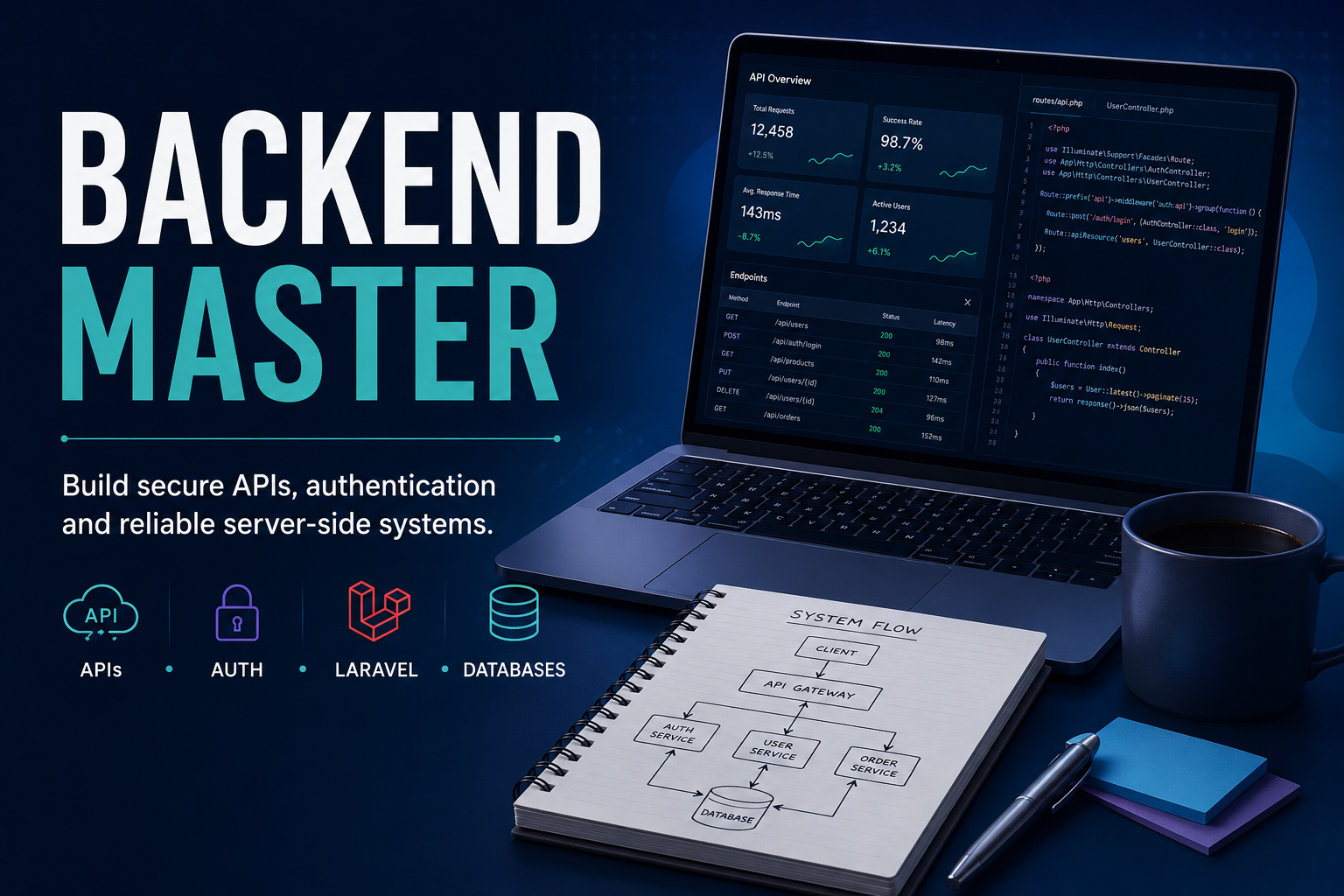
Server-side programming, APIs, authentication, and database integration. Across 12 modules you learn to build the part of an application users never see but always feel — the layer that decides whether a product is fast, secure, and trustworthy, or merely functional until it isn’t.
The course ends at a production-ready REST API, and the phrase is meant literally. Error handling, logging, testing, configuration, and security each get their own module rather than being mentioned in passing. Those are precisely the things that separate an API that works on your machine from one that survives real traffic.
Who this course is for
- Front-end developers who can build interfaces and now want to own the data and logic behind them
- Students and self-taught developers who have built projects but never deployed something others depend on
- Developers whose applications work until something goes wrong, and who want to understand error handling, logging, and debugging properly
- Anyone who wants backend depth rather than full stack breadth
What you will build
You work on a real API from early on rather than building toy endpoints. Routing and middleware, relational schemas and queries, authentication and permissions, file uploads, third-party service integrations, structured error handling, logging, and an automated test suite.
The final project is a production-ready REST API — properly authenticated, tested, documented, configured across environments, and deployed.
Course curriculum
Server fundamentals
- Backend Fundamentals & Node.js Setup
- Express.js & Routing
- Middleware & Request Handling
Middleware gets its own module because understanding the request lifecycle — what runs, in what order, and what can short-circuit it — is what makes everything afterwards make sense.
Data
- SQL Fundamentals
- Database Design & ORM
You write SQL before an ORM hides it. When a query is slow in production, the ORM will not explain why — your understanding of the underlying SQL will.
API design and security
- RESTful API Design
- Authentication & Authorization
- File Uploads & Third-Party Integrations
API design is treated as design: resource naming, status codes, consistent error shapes, versioning, and the contract you are asking other developers to rely on. Authentication and authorisation are taught as distinct problems, because confusing the two is the source of a great many real security incidents.
Reliability and delivery
- Error Handling & Logging
- Testing APIs
- Deployment, Config & Security
- Final Project — Production-Ready REST API
Error handling and logging come before testing deliberately. You cannot meaningfully test behaviour you have not decided how to handle, and you cannot debug an incident you have no logs for.
Technologies you will work with
Node.js, Express, middleware patterns, SQL and relational database design, an ORM layer, REST API design, authentication and authorisation, file upload handling, third-party API integration, structured logging, API testing tooling, environment configuration, and deployment.
By the end of this course
- Design and build a REST API other developers could consume without asking you questions
- Model relational data and write the SQL behind it
- Implement authentication and authorisation correctly, understanding the difference
- Handle errors predictably and log enough to diagnose an incident after the fact
- Write automated tests covering real API behaviour
- Configure and deploy across environments without secrets leaking into your repository
- Ship an API you would be willing to put in front of real users
Related courses at COMPLIT
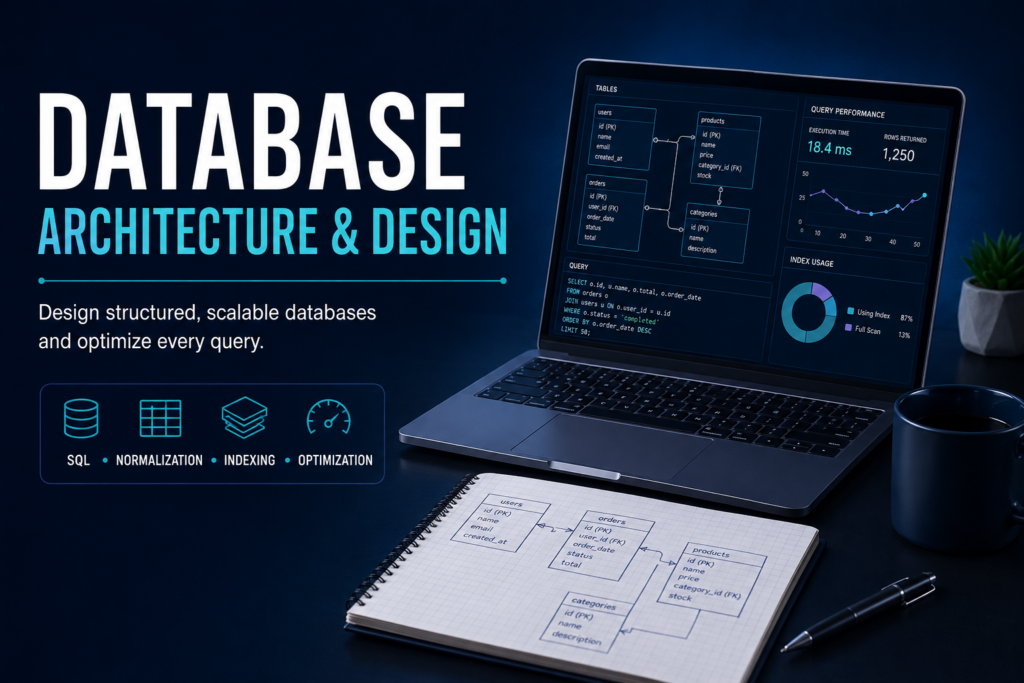
For deeper data modelling than this course covers, see Database Architecture & Design. For the interface layer that consumes what you build here, see Front-End Development. To cover both ends in one programme, see Full Stack Development.
Browse everything on the COMPLIT courses page, or get in touch if you are unsure which course fits you.